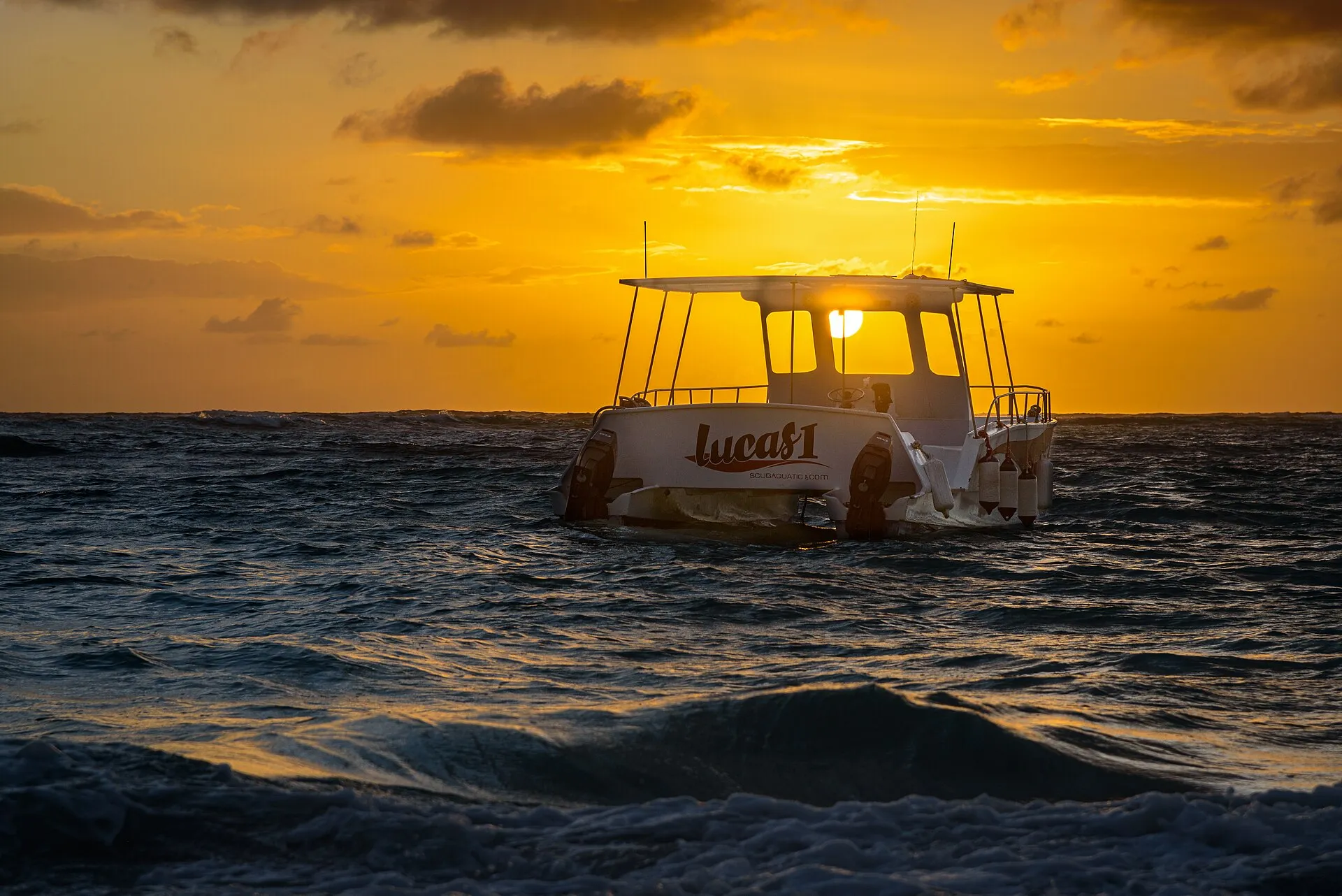
Punta Cana in March
Photo: Mustang Joe, CC0, via Wikimedia Commons.

March is the driest-feeling month in Punta Cana: about 11.4 days with at least 1 mm of rain, the fewest of the year, and 42 mm in total. Highs average 26.6 °C (80 °F), lows 23.3 °C (74 °F), and humidity is at its lowest (74%). The sea is still cool (26.7 °C) but waves ease to 1.65 m. These are 1995-2024 ERA5 averages.
| Average high | 26.6 °C (80 °F), rank 10 of 12 (1 = hottest) |
|---|---|
| Average low | 23.3 °C (74 °F) |
| Rainfall | 42 mm (1.7 in), rank 11 of 12 (1 = wettest) |
| Days with rain (1 mm+) | 11.4 |
| Relative humidity | 74% |
| Daily maximum wind (average) | 19.6 km/h |
| Sea surface temperature | 26.7 °C (80 °F), rank 11 of 12 (1 = warmest) |
| Average wave height offshore | 1.65 m |
Source: Open-Meteo (Copernicus ERA5), licence CC BY 4.0 - https://open-meteo.com/en/license. Reanalysis grid values (about 25 km cells that include sea). Afternoon highs on the beach and inland are typically 1-2 C warmer than tmax shown; rainfall falls mostly as short tropical showers.
Is March drier than February?
In millimetres, almost the same: 42 mm in March against 41 mm in February. In number of rainy days, March wins clearly, with 11.4 days with at least 1 mm against 12.1 in February and 13.7 in January. So a March week is the most likely of the year to be free of showers. Humidity drops to 74%, the lowest value in the data, and the air feels lighter than in the summer months (80-81%).
The shower pattern is also different from the wet season. In March, rain is usually brief, and a “rainy day” in the data means 1 mm or more, which can be a single short shower. For what the numbers mean in practice, see the rainy season guide.
| Measure | March | Compared with the year |
|---|---|---|
| High / low | 26.6 / 23.3 °C | Third coolest highs |
| Rain | 42 mm | Second lowest |
| Days with 1 mm or more | 11.4 | Lowest |
| Humidity | 74% | Lowest |
| Sea temperature | 26.7 °C | Second coolest |
| Offshore waves | 1.65 m | Mid-range, falling |
How warm is the sea in March?
March has the second coolest sea of the year at 26.7 °C (80 °F), just 0.1 °C above February and 0.5 °C below January or April (27.2 °C). Warm-water enthusiasts will find a clear rise only from April and May (28.0 °C). The water temperature is based on 2022-2025 marine data, so use it as a guide rather than a forecast.
Is the sea calmer in March?
A little. Offshore waves fall to 1.65 m from 1.77 m in February, and the wind indicator slips from 20.5 to 19.6 km/h. The calmest month of the year is May (1.19 m), so March is a transition: still a lively Atlantic, but easier than December or February. Reef-protected beaches in Bávaro and Cabeza de Toro remain the more comfortable choices for swimming, while Macao and Uvero Alto face open water. The wind and waves by month page shows the zones in more detail.
Is there hurricane risk in March?
No. The Atlantic hurricane season runs from 1 June to 30 November, and the HURDAT2 record shows no system within 150 km of Punta Cana in March since 1950. March is the end of the quietest stretch of the calendar, ahead of a rainier May.
Is there sargassum in March?
Usually not at its worst. The University of South Florida Sargassum Watch System describes the tropical Atlantic belt as lowest in winter and peaking around June or July, with some winters being exceptions. March is the time to start checking the monthly outlook, because the seasonal build-up toward summer is when Caribbean coasts see more arrivals. Which coasts are most exposed is covered in the sargassum guide.
Is the whale season over in March?
Nearly. Humpback whale watching in Samaná Bay is organised under permits from the Dominican Ministry of Environment, and the season opened in mid-January in 2026. The final trips are normally in the last days of March, so March is the last chance of the winter. If whales are a priority, February offers more weeks in the season. Details and logistics are in the Samaná whale watching guide.
When does Holy Week fall, and what does it change?
Holy Week (Semana Santa) moves between March and April depending on the Easter date. Good Friday is a public holiday in the Dominican Republic: in 2026 it was 3 April, which created a long weekend from 3 to 5 April. When Holy Week falls in March, expect Dominican families to travel to the coast, and expect busier roads, beaches and restaurants outside the resorts. Check the Easter date for your year before booking. In 2026 it fell in early April, so the April page covers it too.
There is no fixed national holiday in March itself: Independence Day is on 27 February, so its long weekend can overlap with 1 March in some years.
What does March mean for sun and heat?
The month has the lowest humidity of the year. Highs of 26.6 °C do not feel extreme, and the breeze can hide how strong the sun is at this latitude. Cover up for the first days and see the sun protection guide.
March compared with February and April
February has the same rainfall but more rainy days (12.1) and rougher seas. April warms up (27.2 °C highs, 27.2 °C sea) and rain rises to 60 mm, so March is the last month before the first noticeable increase in rainfall. For a broader decision on when to travel, see the best time to visit guide.
What to pack for March
- Light clothes for 26-27 °C days and a thin layer for the evenings.
- A hat and sunglasses.
- A rash vest or light top if you plan to snorkel in the slightly cool water.
- A small umbrella or packable rain jacket for the occasional short shower.
Frequently asked questions
Is March a good time to visit Punta Cana?
Yes for dry weather. March has the fewest rainy days of the year (11.4 days with at least 1 mm), 42 mm of rain and the lowest humidity (74%). Highs average 26.6 °C (80 °F). The sea is still cool at 26.7 °C, so it suits visitors who prefer sunshine to bathwater.
When does Holy Week fall in Punta Cana, March or April?
It depends on the year because Easter moves. Holy Week falls in March in some years and April in others. In 2026, Good Friday was 3 April, a public holiday that created a long weekend from 3 to 5 April. Check the Easter date for your travel year, as Dominican families also travel then.
Is the sea calmer in March than in February?
Slightly. Offshore waves average 1.65 m in March against 1.77 m in February, and the wind indicator drops from 20.5 to 19.6 km/h. The reef-protected beaches are calm on most days. Open-sea beaches such as Macao and Uvero Alto stay rougher than the rest of the coast.
Can you still see whales in March?
Yes, at the end of the season. Humpback whale watching in Samaná Bay normally runs from mid-January until the last days of March, and March is the final stretch. The whales are in Samaná, not off Punta Cana, so it is a full-day excursion. Check the current closing date.
Sources
- Open-Meteo Historical Weather API (Copernicus ERA5)
- Open-Meteo Marine Weather API
- NOAA National Hurricane Center, HURDAT2 best-track data
- DR1, 2026 Dominican public holidays and days off (Ministry of Labor list)
- Rio Times, Samaná whale watching season (Ministry of Environment opening)
- University of South Florida, Sargassum Watch System